
I was sitting in my kitchen following a dinner recipe on my phone when I saw the news. A man with a microphone, standing in front of college students, shot mid-sentence. For a moment I just stared at the words on the screen, the way you stare at something your mind doesn’t quite want to accept.
We’re used to bad news. Hurricanes. Shootings in neighborhoods we’ve never heard of. Political scandals that feel like reruns. But this was different. This wasn’t random. It wasn’t a freak accident. This was deliberate. Someone raised a rifle because they believed another man’s words were dangerous enough to kill.
Charlie Kirk’s death didn’t just rattle me because of who he was, but because of what it revealed. We like to imagine that kind of violence belongs to another era, the grainy black-and-white of history books. But America’s story has always been stained with blood spilled in the public square. And history says it never stays in the past.
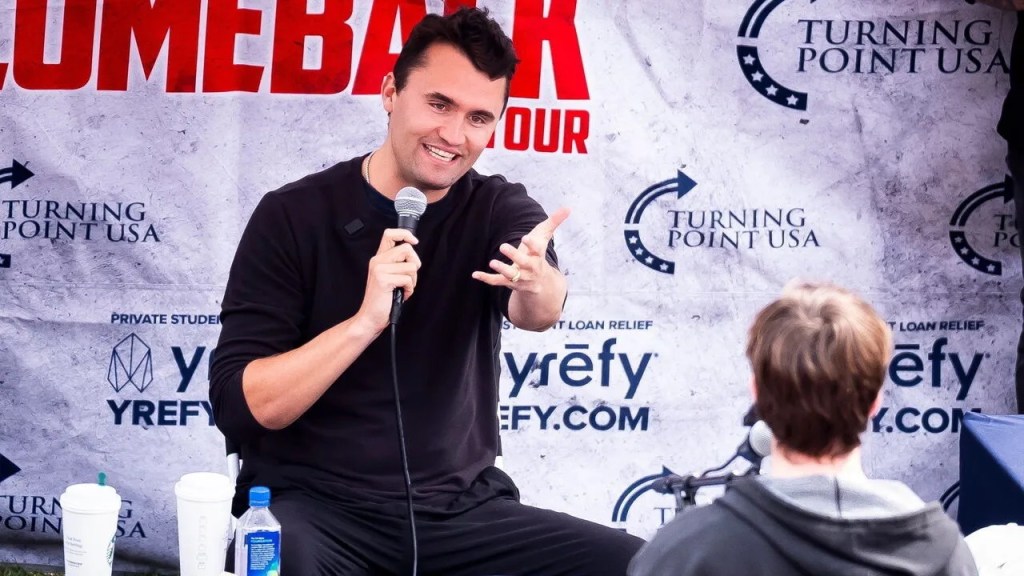
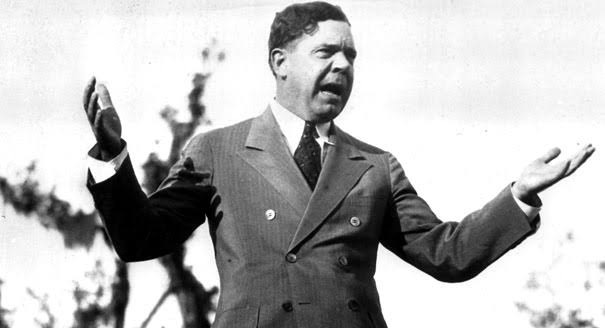
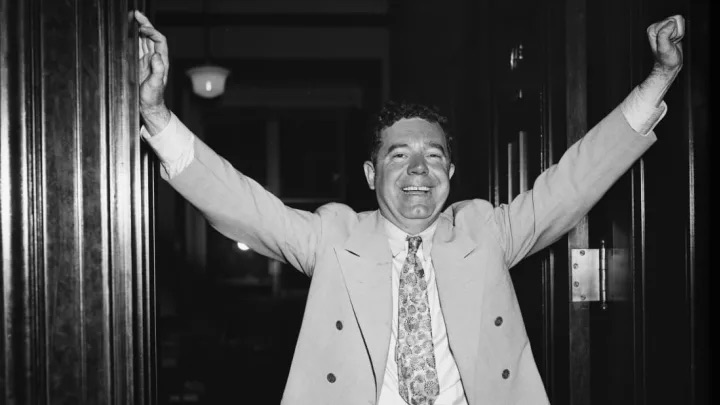
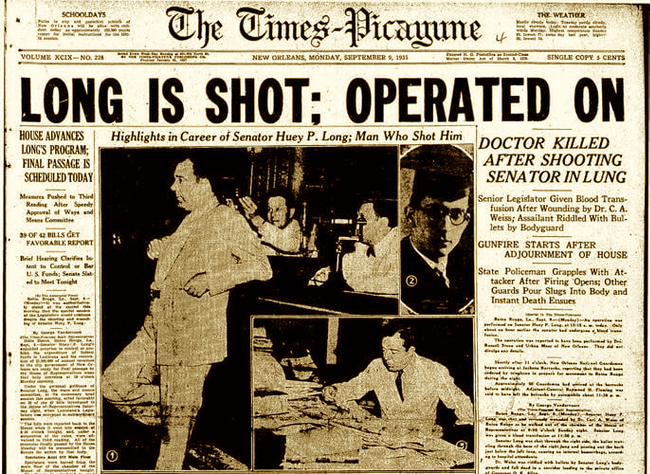
The Great Depression hollowed out America. Families lined up for bread. Dust storms swallowed farms whole. Out of Louisiana rose Huey Long, the “Kingfish,” strutting like he owned the stage. To some he was a savior, promising “Every Man a King.” To others he was a tyrant waiting to crown himself. He built highways and schools, taxed the rich, and left a trail of both devotion and fear. One night in the marble halls of his own capitol, gunfire rang out. The Kingfish fell, and with him a future that terrified his enemies and electrified his followers. But his death didn’t bury the anger that made him. The populist fire he stoked kept burning long after his body went cold.
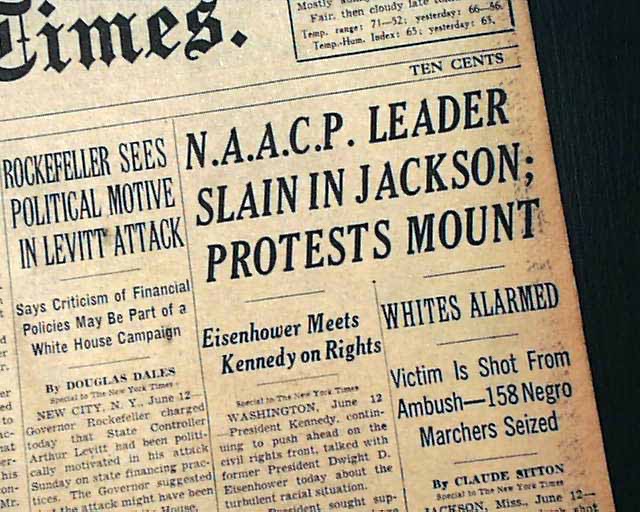
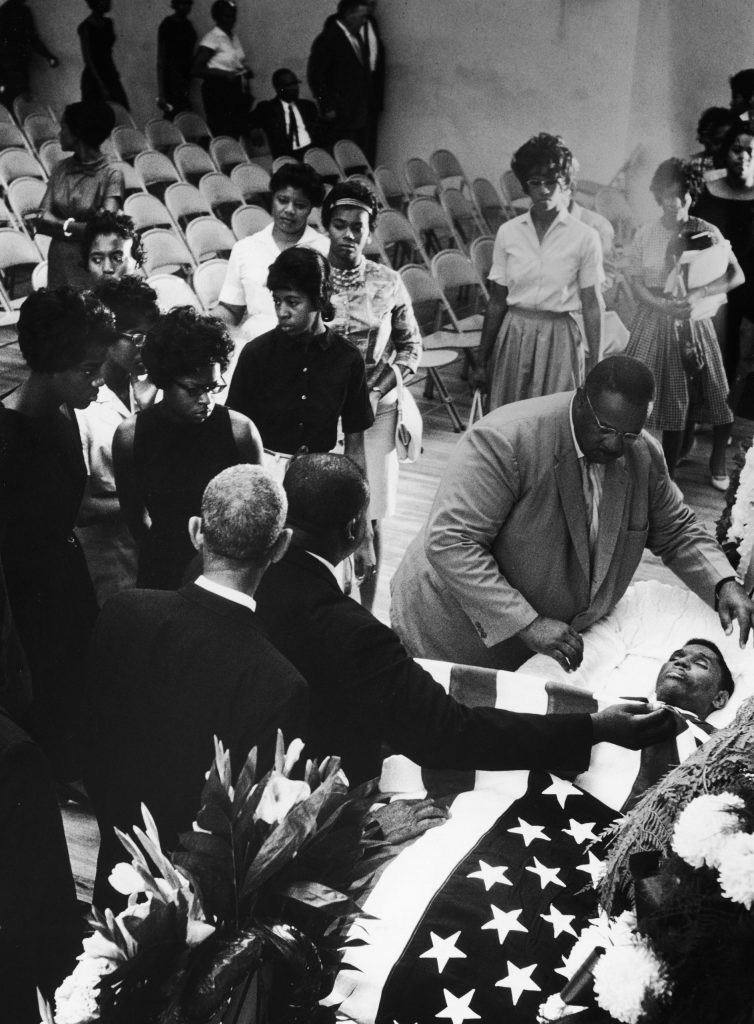
Three decades later, in Jackson, Mississippi, Medgar Evers pulled into his driveway after a long day of work. Evers wasn’t a politician. He was a veteran who had returned from World War II determined to see his country live up to its own promises. As the field secretary for the NAACP in Mississippi, he spent his days organizing boycotts, filing lawsuits against segregation, registering Black voters, and enduring death threats for daring to challenge Jim Crow. He was weary that night, but his wife and three young children were waiting at the door. Before he could reach them, a white supremacist’s bullet struck him in the back. He collapsed on the pavement, only steps from home. His children saw their father bleed out.
The nation saw it too. His funeral was televised. His name joined the growing list of martyrs for freedom. And the Civil Rights Movement did not stall. It surged forward with greater resolve. The bullet that killed Medgar Evers did not silence him. It transformed him into a symbol whose voice carried farther in death than it ever could in life.
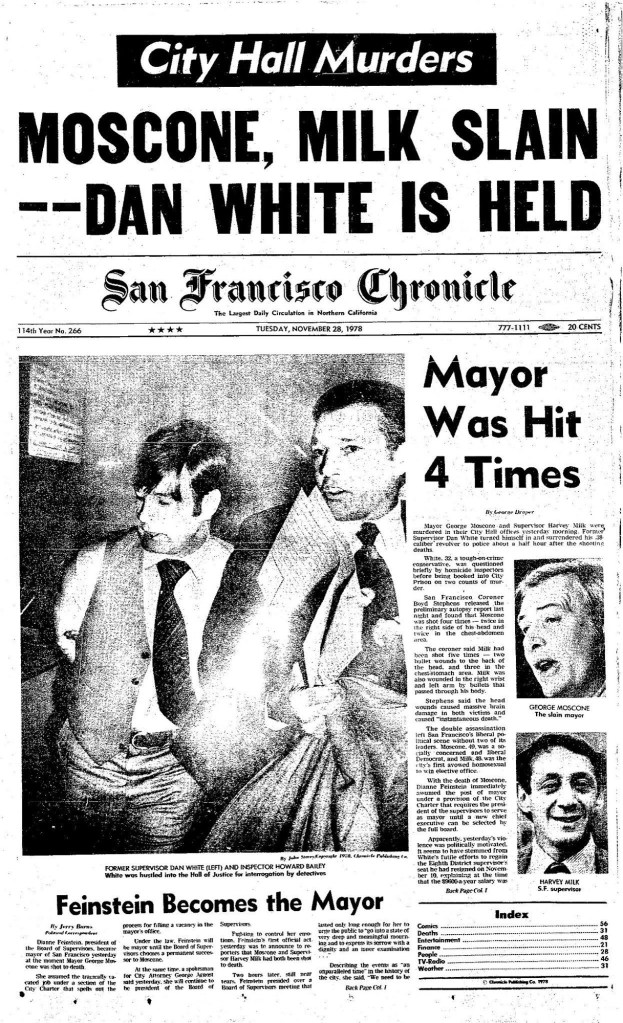
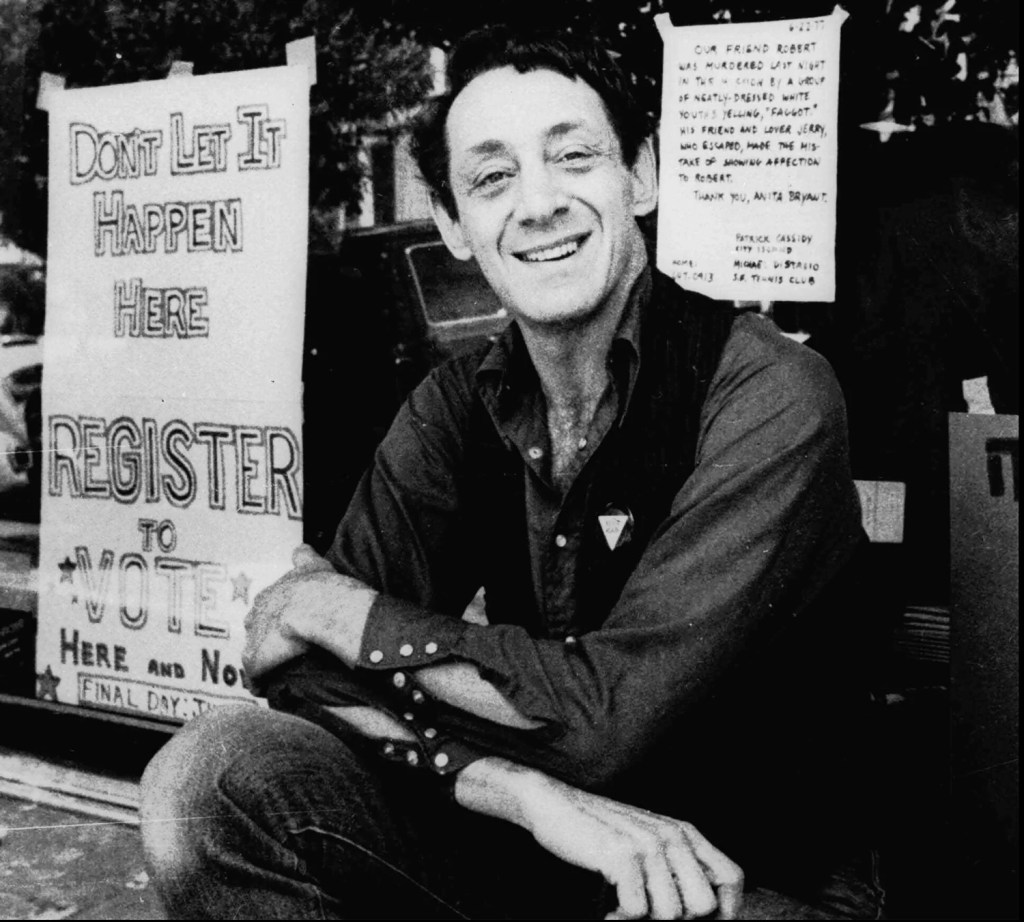
In 1978, San Francisco’s City Hall turned into a killing ground. Harvey Milk, the first openly gay elected official in California, had become a voice for those long silenced. Alongside Mayor George Moscone, he was steering the city toward a new kind of visibility. Not everyone was ready. Dan White, bitter and undone by jealousy, walked in with a revolver. Two men were left dead.
San Francisco erupted. Candlelight vigils wound through the streets, but so did riots. Storefronts smashed, police cars overturned. Milk’s voice was gone, but his story grew louder. Today his name is stitched into the history of a movement that only grew bolder after his murder.
Charlie Kirk was not Huey Long. He was not Medgar Evers. He was not Harvey Milk. He was something different: a culture warrior with a national microphone, adored by some, despised by others, shaping the imagination of a generation. His killing fits the old pattern all too well. A polarizing figure silenced, only to become more than he was in life. History tells us that such blood never just dries. It seeps into the soil, into memory, into movements that will not be quiet.
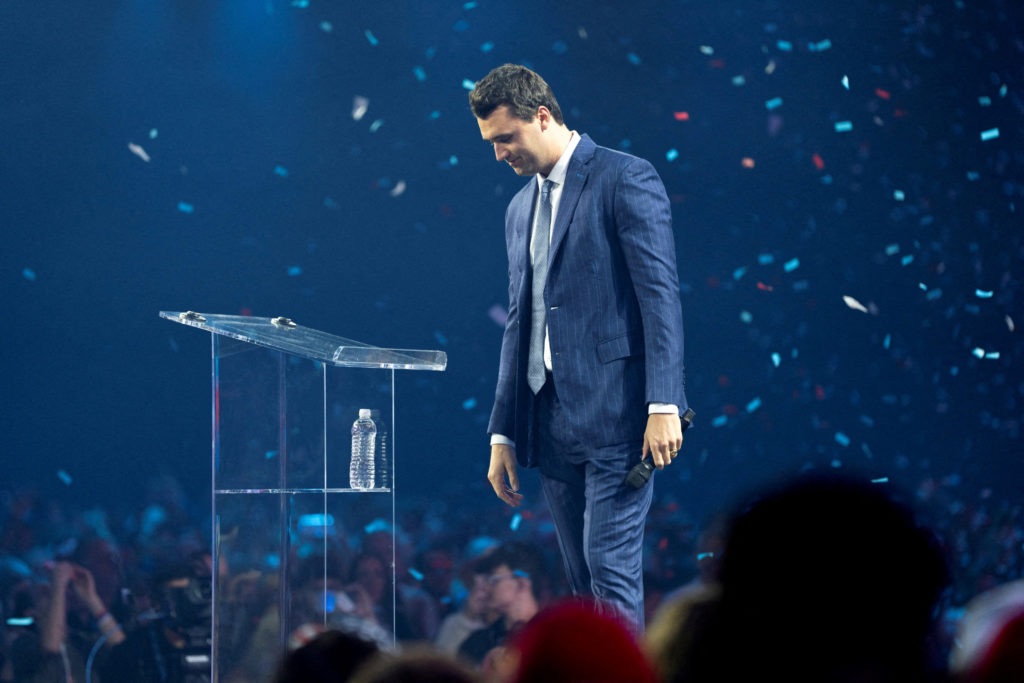
This history tells us that America is fragile. Every time the culture hits a fever pitch, blood seems to spill. Assassination does not end arguments, it enshrines them. It transforms flawed men into symbols. A bullet cannot kill an idea. If anything, it etches it deeper into the public imagination.
So what happens now? Security will tighten. Politicians and activists will retreat behind metal detectors, armed guards, and barricades. The open square will shrink. Narratives will calcify. For some, Kirk will be remembered as a martyr for truth. For others, his death will be dismissed or mocked, proof that his rhetoric was as dangerous as his opponents claimed. And all the while, the center—the space where real conversation might have been possible—will collapse further.
For Christians, caution is needed. We must resist the urge to sanctify politics. Charlie Kirk was a man, not a messiah. His death was tragic, but it was not Calvary. We honor his life without confusing it with Christ’s. We must also resist vengeance. Rage rises like a tide in moments like this. The cycle of hate demands another punch, another shot, another casualty. But Jesus calls us to pray for our enemies and bless those who curse us. That is not weakness. It is strength of a different kind, the hardest kind in an age of violence.
We need to be careful with our language. The word “martyr” belongs to those who die explicitly for Christ. Around the world, brothers and sisters are dragged from churches and gunned down for carrying a Bible, not a political banner. To confuse categories is to diminish their witness. And finally, we must not forget the imago Dei in every person, even the ones we despise. When we celebrate death, we corrode our own humanity.
History has shown us again and again that blood spilled in the public turns men into symbols, movements into legends, and fractures into deeper fault lines. Charlie Kirk’s death will not quiet the arguments of our age. It will sharpen them. It will be used, twisted, and claimed by both sides as proof of whatever story they were already telling themselves. That is what we should expect from a society where politics has become war by other means.
The call is to see clearly. To recognize that violence will never heal us. To admit that when we celebrate death, we are no better than Cain in the field. To believe that our task is not to deepen the tribal trenches but to live as a people who can bear witness to another kingdom, one that cannot be assassinated.
That is where I land. As a Christian, as a citizen, as someone living in this fractured land. We are fragile, and history tells the truth about that fragility. But history also reminds us that even when the gunfire echoes and the crowd scatters, there remains a greater story. The kingdoms of this world rise and fall. Only one King walked into death and came out the other side. Only one kingdom can promise peace that does not bleed away.
The blood in the public square is crying out again. The question is whether we will keep answering with more of the same, or whether we will finally learn to listen.
 Westerman.Blog